
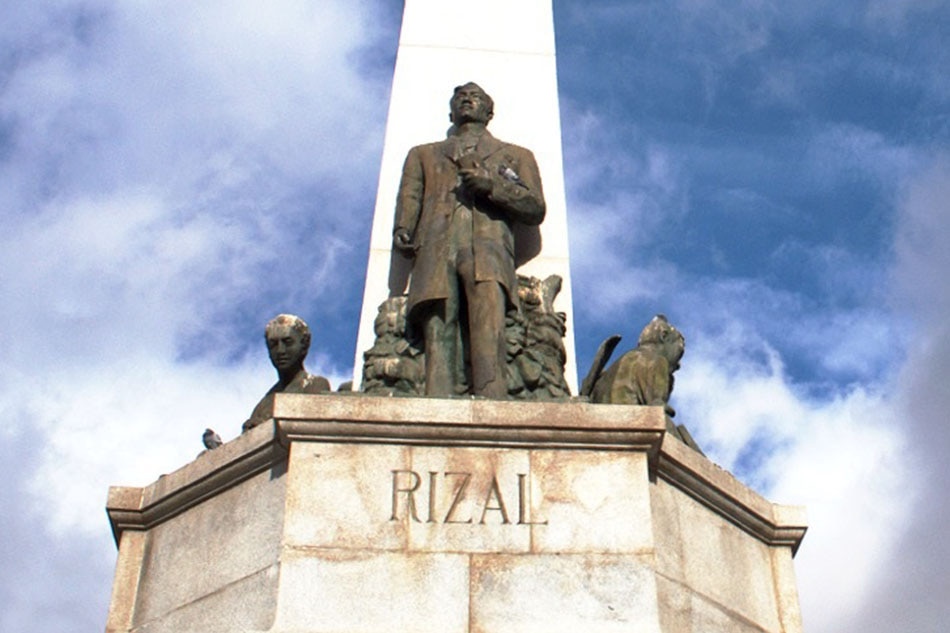

Singapore served as a significant stopover for Jose Rizal on his journey to Spain in 1882. Arriving on May 9th aboard the Salvadora, Rizal spent two days exploring the city, captivated by its Botanical Garden, Buddhist temples, and bustling commercial district. Impressed by Singapore's modernity compared to the Philippines, Rizal gained valuable insights that would later influence his nationalist views. After his brief sojourn, he continued his voyage to Europe on the Djemnah steamer.
 |
| Rizal Monument in Singapore (Location) |

In June 1883, Rizal traveled to Paris to specialize in ophthalmology under renowned doctors. His primary goal was to treat his mother’s eye ailment. After gaining expertise, he returned to Madrid and contemplated writing a book exposing Spanish colonial abuses in the Philippines.
While the majority of the writing for El Filibusterismo took place in Belgium, Rizal completed the novel in France in March 1891. Financial constraints delayed its publication. Facing economic hardship, he relied on limited funds while continuing his literary work. |
| Place Jose Rizal in Paris (Location) |

Rizal deepened his ophthalmology knowledge by studying under renowned experts in Heidelberg. A pivotal moment occurred in March 1887 with the publication of Noli Me Tangere in Berlin. This groundbreaking novel, made possible by Maximo Viola's financial support, marked a significant step in Rizal's advocacy for the Philippines.
During his time in Berlin, Rizal also met Dr. Feodor Jagor, author of "Travels in the Philippines," whose keen observations of the archipelago inspired Rizal. The city became the launching pad for Rizal's literary activism, as Noli Me Tangere paved the way for Filipinos' pursuit of independence from Spain.
 |
| Rizal's Historical Maker in Germany (Location) |
 |
| Rizal Park in Germany (Location) |

Pressured by Spanish authorities and his family to avoid persecution, Rizal left Manila for Hong Kong in February 1888. This became a temporary refuge where he nurtured his dreams for the Philippines while preparing for his eventual return. Before departing, Rizal penned a heartfelt farewell letter to his family, expressing his love and patriotism, to be opened posthumously.
From Hong Kong, Rizal embarked on a journey that took him to Macau and Japan before arriving in San Francisco, California, in April 1888. His American sojourn included visits to Nevada, Utah, Colorado, Nebraska, Illinois, and New York, where he diligently recorded his observations.
 |
Rizal Marker in Hong Kong (Location) |

 |
| Rizal' Plaque in London (Location) |

Rizal's most significant accomplishment in Ghent, Belgium was the completion of his second novel, El Filibusterismo, finished on March 29, 1891. Ghent's lower cost of living and printing made it an ideal location for this endeavor. Despite financial constraints, Rizal persevered, living frugally and relying on friends' support.
References:
Capino, Diosdado G. “Jose Rizal and His Meaning for Germany.” Internationales Jahrbuch Für Geschichtsunterricht, vol. 8, 1961, pp. 183–194, www.jstor.org/stable/43054787.
de Ocampo, Estaban A. “Dr. Jose Rizal, Father of Filipino Nationalism.” Journal of Southeast Asian History, vol. 3, no. 1, 1962, pp. 44–55, www.jstor.org/stable/20067366.
Filipinas Heritage Library. “The Travels of Rizal.” Www.filipinaslibrary.org.ph, 2018, www.filipinaslibrary.org.ph/articles/the-travels-of-rizal/.
“Jose Rizal [Travels].” Www.joserizal.ph, www.joserizal.ph/tr01.html.
Mojares, Resil B. “Jose Rizal in the World of German Anthropology.” Philippine Quarterly of Culture and Society, vol. 41, no. 3/4, 2013, pp. 163–194, www.jstor.org/stable/43854727.
“Reminiscences and Travels of Jose Rizal | WorldCat.org.” Worldcat.org, 2024, search.worldcat.org/title/263888. Accessed 8 Aug. 2024.
“Retracing Rizal’s Footsteps in Germany.” Inquirer Lifestyle, 18 June 2017, lifestyle.inquirer.net/265729/retracing-rizals-footsteps-germany/.
No comments:
Post a Comment